
Skip to main navigation Skip to main content
  • KAPS
  • E-Submission

APS : Advances in Pediatric Surgery

OPEN ACCESS
ABOUT
BROWSE ARTICLES
EDITORIAL POLICY
FOR CONTRIBUTORS
Original Article

The Outcomes of Treatment for Sacrococcygeal Teratoma: The 24-year Experiences

CS Gong, M.D., SC Kim, M.D., DY Kim, M.D., IK Kim, M.D.1, JM Namgung, M.D., JH Hwang, M.D., JJ Kim, M.D.2
Journal of the Korean Association of Pediatric Surgeons 2013;19(2):81-89.
Published online: December 24, 2013

Pediatric Surgery, University of Ulsan College of Medicine and Asan Medical Center, Seoul, Korea.

1Department of Surgery, University of Ulsan College of Medicine and GangNeung Asan Medical Center, GangNeung, Korea.

2Department of Pathology, University of Ulsan College of Medicine and Asan Medical Center, Seoul, Korea.

Correspondence: Seong-Chul Kim, M.D., Division of Pediatric surgery, Asan Medical Center, Asanbyeongwon-gil 86, Sonpa-gu, Seoul 138-736, Korea. Tel: 02)3010-3498, Fax: 02)474-6701, sckim@amc.seoul.kr
• Received: August 28, 2013   • Accepted: November 21, 2013

Copyright © 2013 Korean Association of Pediatric Surgeons

  • 0 Views
  • 0 Download
prev next
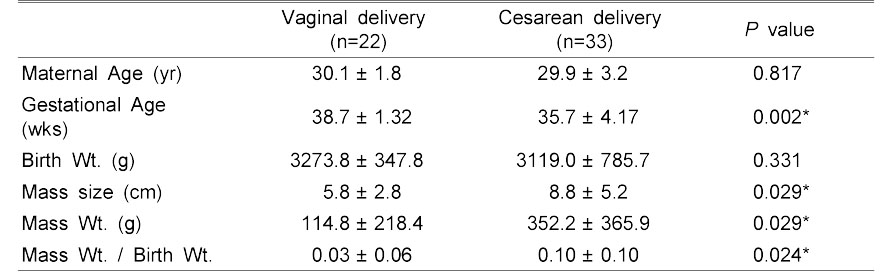
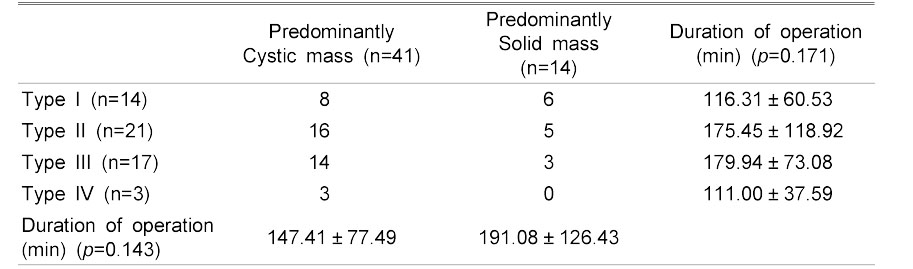
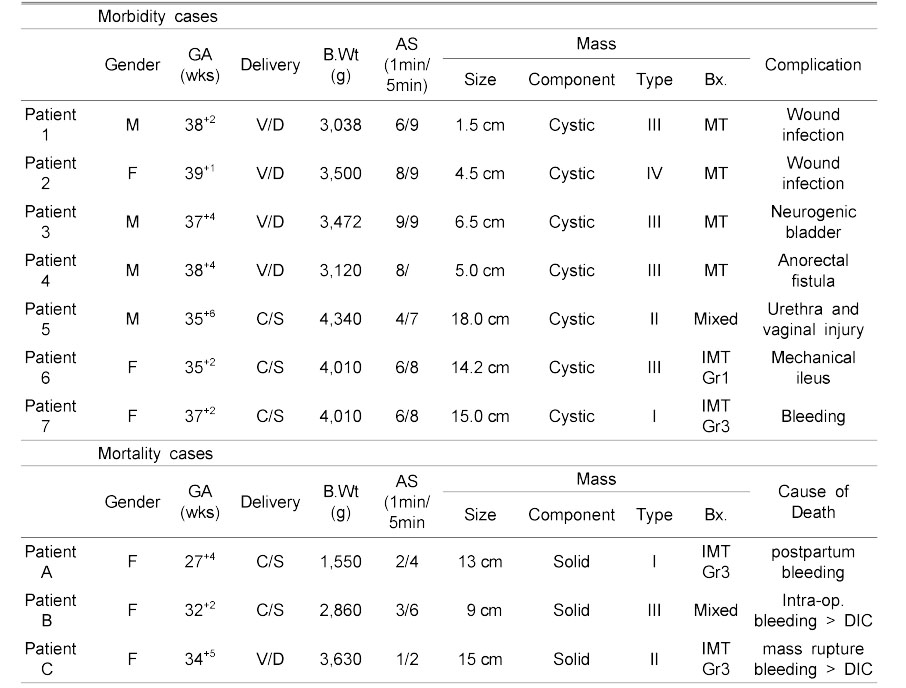
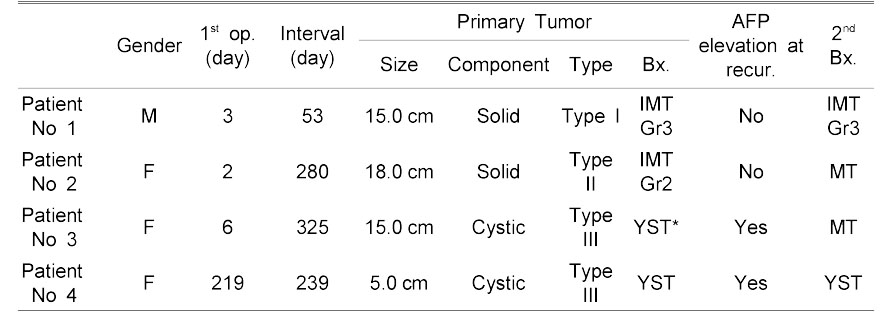
  • The purposes of this study was to describe the clinical correlation of mass size and gestational age, prognostic factors in sacrococcygeal teratoma (SCT) at a tertiary pediatric surgery, University of Ulsan College of Medicine and Asan Medical Center (AMC), Seoul, Korea. Fifty five patients admitted to the AMC with a SCT between May 1989 and April 2013 were included in this retrospective review. Mean follow up was 861 days. Mean maternal age at delivery was 30 ± 2.7 year, mean gestational age (GA) was 36.9 ± 3.6wks, and preterm delivery was 21.8%. Birth body weight was 3182 ± 644 g and male vs. female ratio was 1:2.05. We can't find significant difference between Caesarean section and maternal age at delivery (p = 0.817). But, caesarean section was favored by gestational age (p = 0.002), larger tumor size (p = 0.029) or higher tumor weight fraction rate to birth body weight (p = 0.024). Type I was 13, II 21, III 17, and IV 3 according to Altman et al. classification. The tumor component was predominantly cystic(>50%) in 73.1%. And the majority histological classification of tumors were mature teratoma (70.3%). The motality rate was 5.5%. Three patients expired because of postpartum bleeding, post-op bleeding related complication such as DIC. SCT recurred in four patients. The interval between first and second operation was 206.2 ± 111.0 d (range 53~325 d). In two patients, serum AFP levels were elevated at a regular checkup without any symptom, and subsequent imaging studies revealed SCT. The most common cause of death was bleeding and bleeding related complication. So Caesarean section and active peripartum and perioperative management will be needed for huge solid SCT. In the case of Yolk sac tumor or huge immature teratoma, possibility of recurrence have to be always considered, so follow up by serial AFP and MRI is important for SCT management.
  • 1. Usui N, Kitano Y, Sago H, et al. Outcomes of prenatally diagnosed sacrococcygeal teratomas: the results of a Japanese nationwide survey. J Pediatr Surg 2012;47(3):441-447.
  • 2. Altman RP, Randolph JG, Lilly JR. Sacrococcygeal teratoma: American Academy of Pediatrics Surgical Section Survey-1973. J Pediatr Surg 1974;9(3):389-398.
  • 3. Ho KO, Soundappan SV, Walker K, Badawi N. Sacrococcygeal teratoma: the 13-year experience of a tertiary paediatric centre. J Paediatr Child Health 2011;47(5):287-291.
  • 4. Isaacs H Jr. Perinatal (fetal and neonatal) germ cell tumors. J Pediatr Surg 2004;39(7):1003-1013.
  • 5. Swamy R, Embleton N, Hale J. Sacrococcygeal teratoma over two decades: Birth prevalence, prenatal diagnosis and clinical outcomes. Prenatal Diagnosis 2008;28(11):1048-1051.
  • 6. Dewan PA, Davidson PM, Campbell PE, Tiedemann K, Jones PG. Sacrococcygeal teratoma: has chemotherapy improved survival? J Pediatr Surg 1987;22(3):274-277.
  • 7. Bilik R, Shandling B, Pope M, Thorner P, Weitzman S, Ein SH. Malignant benign neonatal sacrococcygeal teratoma. J Pediatr Surg 1993;28(9):1158-1160.
  • 8. Huddart SN, Mann JR, Robinson K, et al. Sacrococcygeal teratomas: the UK Childre's Cancer Study Group's experience. I. Neonatal. Pediatr Surg Int 2003;19(1-2):47-51.
  • 9. Gabra HO, Jesudason EC, McDowell HP, Pizer BL, Losty PD. Sacrococcygeal teratoma-a 25-year experience in a UK regional center. J Pediatr Surg 2006;41(9):1513-1516.
  • 10. Graf JL, Albanese CT. Fetal Sacrococcygeal Teratoma. World J Surg 2003;27(1):84-86.
  • 11. Sy ED, Filly RA, Cheong M-L, et al. Prognostic Role of Tumor-Head Volume Ratio in Fetal Sacrococcygeal Teratoma. Fetal Diagnosis and Therapy 2009;26(2):75-80.
  • 12. Coleman A, Kline-Fath B, Keswani S, Lim F-Y. Prenatal solid tumor volume index: novel prenatal predictor of adverse outcome in sacrococcygeal teratoma. J Surg Res 2013;184(1):330-336.
  • 13. Shue E, Bolouri M, Jelin EB, et al. Tumor metrics and morphology predict poor prognosis in prenatally diagnosed sacrococcygeal teratoma: A 25-year experience at a single institution. J Pediatr Surg 2013;48(6):1225-1231.
  • 14. Labdenne P, Heikinheimo M. Clinical use of tumor markers in childhood malignancies. Ann Med 2002;34(5):316-323.
  • 15. Rescorla FJ, Sawin RS, Coran AG, Dillon PW, Azizkhan RG. Long-term outcome for infants and children with sacrococcygeal teratoma: a report from the Childrens Cancer Group. J Pediatr Surg 1998;33(2):171-176.
  • 16. Yoshida M, Matsuoka K, Nakazawa A, et al. Sacrococcygeal yolk sac tumor developing after teratoma: A clinicopathological study of pediatric sacrococcygeal germ cell tumors and a proposal of the pathogenesis of sacrococcygeal yolk sac tumors. J Pediatr Surg 2013;48(4):776-781.
Fig. 1
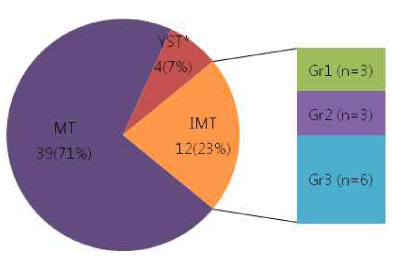
Histological classification
MT; Mature teratoma, IMT; Immature teratoma, YST; York sac tumor, Gr;Grade * Three patients with mixed type consisting of YST and mature and immature teratoma are included in this group
jkaps-19-81-g001.jpg
Fig. 2
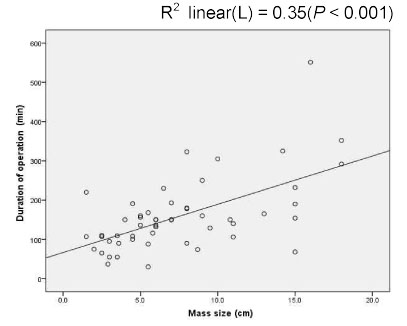
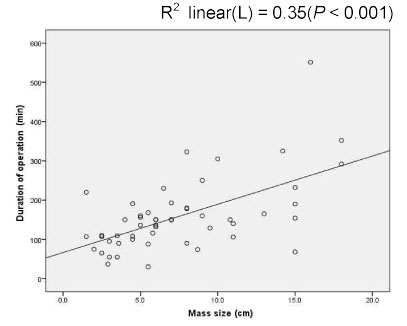
Duration of operation and Mass size by univariate linear regression analyses
jkaps-19-81-g002.jpg
Table 1
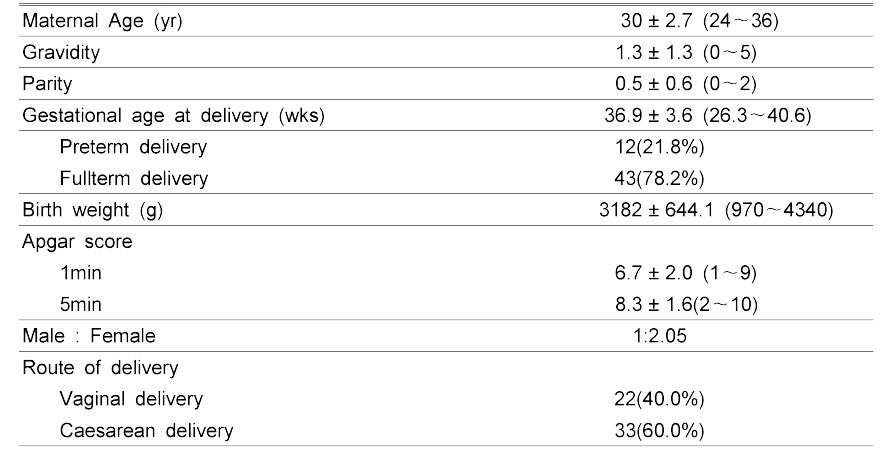
Demographics of the Patients

Values are presentated mean ± SD (range) or number (%)

jkaps-19-81-i001.jpg
Table 2
Route of Delivery (Vaginal vs. Cesarean delivery)

Values are presentated mean ± SD

Statistical significances were tested by Oneway analysis among group
jkaps-19-81-i002.jpg
Table 3
Gestational Age and Mass Size (P<0.001)

M; Mass size

Values are presentated number (%)

jkaps-19-81-i003.jpg
Table 4
Types and Tumor Component and Duration of Operation

Values are presentated mean ± SD or number

Statistical significances were tested by Oneway analysis among group
jkaps-19-81-i004.jpg
Table 5
Postoperative Morbidity and Mortality Cases of Sacrococcygeal Teratoma Patients

GA; Gestational Age, B.Wt; Birth Body Weight, V/D; Vaginal delivery, C/S; Caesarean section, AS; Apgar Score, Bx.; Biopsy (histological classification), IMT; Immature teratoma, MT; Mature teratoma, Gr; Grade, DIC; Disseminated Intravascular Coagulation
jkaps-19-81-i005.jpg
Table 6
Recurrence Cases of Sacrococcygeal Teratoma Patients

1st op. ; Age at 1st operation, Interval; The interval between first and second operation, Bx.; Biopsy(histological classification), 2nd Bx; The biopsy result of recurred tumor, MT; Mature teratoma, IMT; Immature teratoma, YST; York sac tumor, Gr; Grade

* IMT Gr3 40 %, MT 50 %, YST < 10 %
jkaps-19-81-i006.jpg

Download Citation

Download a citation file in RIS format that can be imported by all major citation management software, including EndNote, ProCite, RefWorks, and Reference Manager.

Format:

Include:

The Outcomes of Treatment for Sacrococcygeal Teratoma: The 24-year Experiences
J Korean Assoc Pediatr Surg. 2013;19(2):81-89.   Published online December 24, 2013
Download Citation

Download a citation file in RIS format that can be imported by all major citation management software, including EndNote, ProCite, RefWorks, and Reference Manager.

Format:
Include:
The Outcomes of Treatment for Sacrococcygeal Teratoma: The 24-year Experiences
J Korean Assoc Pediatr Surg. 2013;19(2):81-89.   Published online December 24, 2013
Close

Figure

  • 0
  • 1
The Outcomes of Treatment for Sacrococcygeal Teratoma: The 24-year Experiences
Image Image
Fig. 1 Histological classification MT; Mature teratoma, IMT; Immature teratoma, YST; York sac tumor, Gr;Grade * Three patients with mixed type consisting of YST and mature and immature teratoma are included in this group
Fig. 2 Duration of operation and Mass size by univariate linear regression analyses
The Outcomes of Treatment for Sacrococcygeal Teratoma: The 24-year Experiences

Demographics of the Patients

Values are presentated mean ± SD (range) or number (%)

Route of Delivery (Vaginal vs. Cesarean delivery)

Values are presentated mean ± SD

Statistical significances were tested by Oneway analysis among group

Gestational Age and Mass Size (P<0.001)

M; Mass size

Values are presentated number (%)

Types and Tumor Component and Duration of Operation

Values are presentated mean ± SD or number

Statistical significances were tested by Oneway analysis among group

Postoperative Morbidity and Mortality Cases of Sacrococcygeal Teratoma Patients

GA; Gestational Age, B.Wt; Birth Body Weight, V/D; Vaginal delivery, C/S; Caesarean section, AS; Apgar Score, Bx.; Biopsy (histological classification), IMT; Immature teratoma, MT; Mature teratoma, Gr; Grade, DIC; Disseminated Intravascular Coagulation

Recurrence Cases of Sacrococcygeal Teratoma Patients

1st op. ; Age at 1st operation, Interval; The interval between first and second operation, Bx.; Biopsy(histological classification), 2nd Bx; The biopsy result of recurred tumor, MT; Mature teratoma, IMT; Immature teratoma, YST; York sac tumor, Gr; Grade

* IMT Gr3 40 %, MT 50 %, YST < 10 %
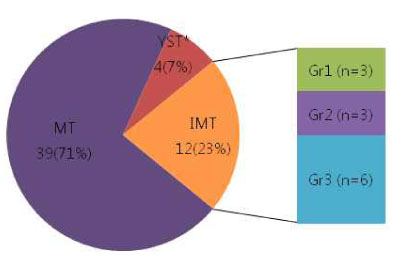
Table 1 Demographics of the Patients

Values are presentated mean ± SD (range) or number (%)

Table 2 Route of Delivery (Vaginal vs. Cesarean delivery)

Values are presentated mean ± SD

Statistical significances were tested by Oneway analysis among group

Table 3 Gestational Age and Mass Size (P<0.001)

M; Mass size

Values are presentated number (%)

Table 4 Types and Tumor Component and Duration of Operation

Values are presentated mean ± SD or number

Statistical significances were tested by Oneway analysis among group

Table 5 Postoperative Morbidity and Mortality Cases of Sacrococcygeal Teratoma Patients

GA; Gestational Age, B.Wt; Birth Body Weight, V/D; Vaginal delivery, C/S; Caesarean section, AS; Apgar Score, Bx.; Biopsy (histological classification), IMT; Immature teratoma, MT; Mature teratoma, Gr; Grade, DIC; Disseminated Intravascular Coagulation

Table 6 Recurrence Cases of Sacrococcygeal Teratoma Patients

1st op. ; Age at 1st operation, Interval; The interval between first and second operation, Bx.; Biopsy(histological classification), 2nd Bx; The biopsy result of recurred tumor, MT; Mature teratoma, IMT; Immature teratoma, YST; York sac tumor, Gr; Grade

* IMT Gr3 40 %, MT 50 %, YST < 10 %